
The Cost of Giving Chances to the Undeserving:
A Growing Challenge in Today’s Corporate World
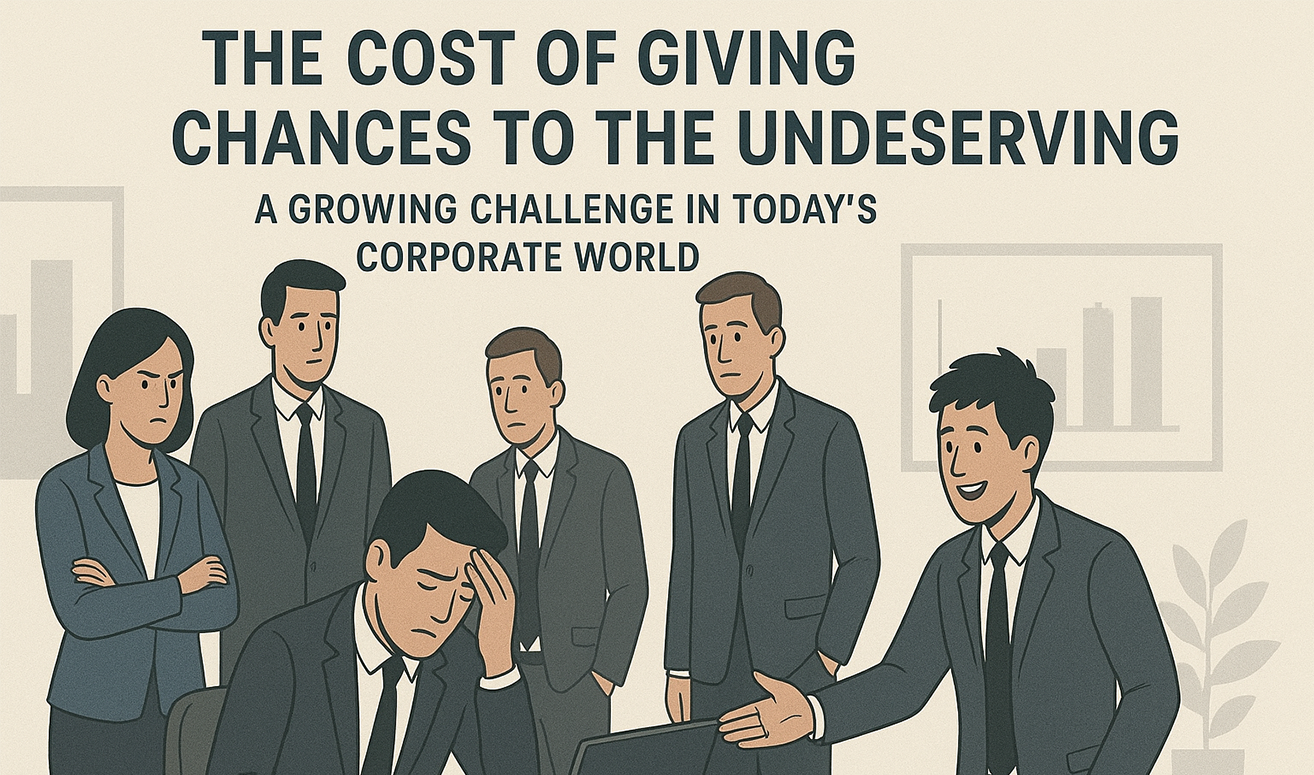
In many organizations today—especially within the Pakistani corporate landscape—there is a rising concern that deserves honest reflection. Companies, often in the name of leniency, connections, or misplaced sympathy, are increasingly giving opportunities to individuals who lack the skills, commitment, or potential required for their roles. While inclusion and second chances are important, consistently prioritizing the undeserving over the deserving has quietly started damaging workplace motivation and culture.
When capable and passionate professionals see unqualified individuals being rewarded with roles or promotions, it breeds frustration and disengagement. The result is a growing lack of interest, passion, and dedication among genuinely talented employees. Why work hard when merit seems to hold less value than relationships or convenience? This mindset is slowly becoming one of the biggest productivity barriers in the corporate sector.
In Pakistan’s professional environment, where many young people strive to prove their worth, this imbalance discourages innovation and excellence. Teams lose morale, performance drops, and organizations unknowingly nurture mediocrity instead of merit.
It’s time for leaders and HR professionals to restore merit-based culture—where opportunities are earned, not granted as favours. Investing in capable, committed individuals may take time and effort, but it pays off through loyalty, innovation, and sustainable growth.
A healthy organization is one where every employee knows that dedication and skill will always be recognized—because when merit is respected, passion naturally follows.
Conclusion
In conclusion, the true strength of any organization lies in its commitment to fairness, merit and accountability. When companies stop rewarding mediocrity and start valuing genuine talent, they not only rebuild trust within their teams but also set the foundation for lasting success. The cost of giving chances to the undeserving is far greater than it seems—it drains motivation, weakens culture, and stifles growth. By restoring a merit-driven environment, organizations can reignite passion, inspire excellence, and secure a future built on integrity and performance.